How Do You Read Breath Acetone Values? What Do 1 ppm to 40 ppm Actually Mean?
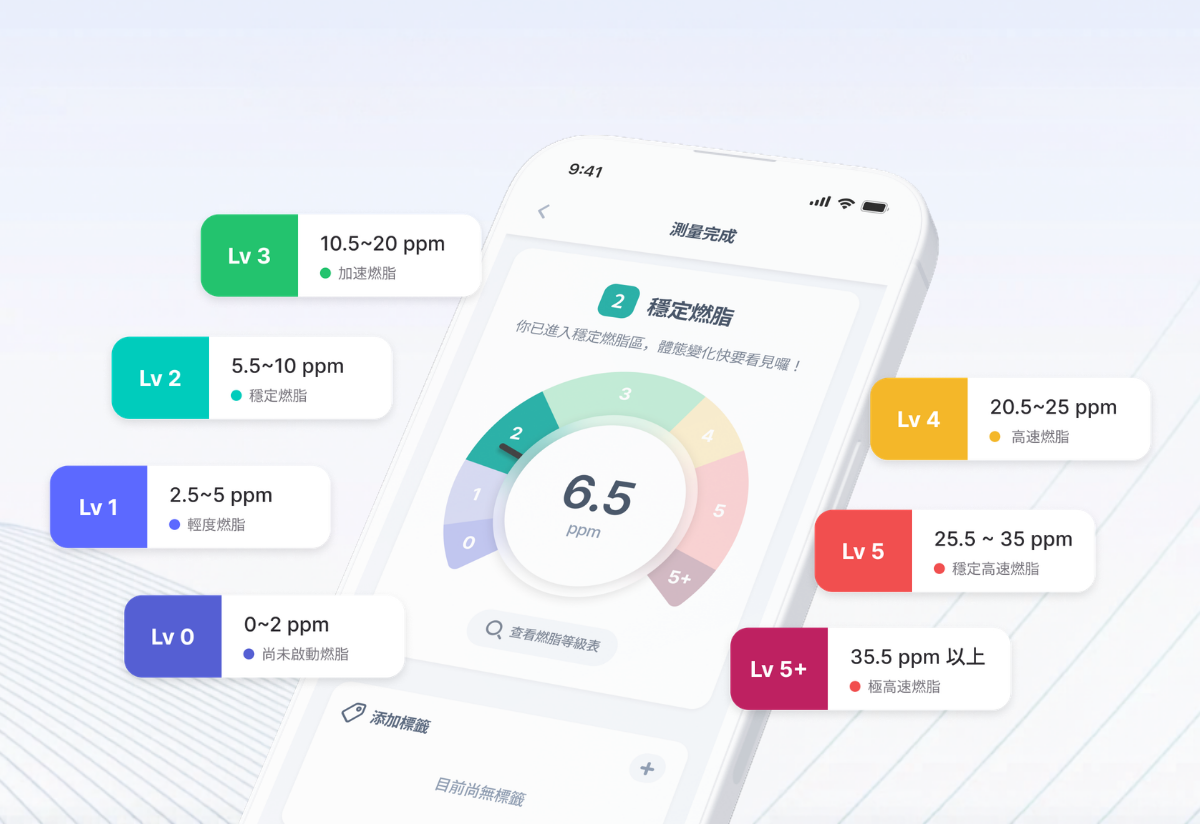
You've started using a breath acetone meter, and the screen shows a number — say, "1.5 ppm" or "8.3 ppm" — but what do these numbers actually mean? How high do they need to go before you're really "burning fat"?
Baseline: Your "Everyday Mode"
For healthy adults on a normal diet, breath acetone concentration typically sits between 0.5 and 2.0 ppm. This represents the body's baseline fat metabolism — your body is always burning a small amount of fat, just at a low level.
Mild Fat Burning: 2 to 5 ppm
When you begin a low-carb diet or practice intermittent fasting (for example, after 12–16 hours of overnight fasting), breath acetone usually rises into the 2 to 5 ppm range. This indicates that your body is relying more heavily on fat as fuel, and you are in a state of "mild ketosis."
Research shows that in this range, participants have a fat oxidation rate of approximately 1.13 mg/kg/min, meaning the body is steadily consuming fat.
Moderate to High Ketosis: 5 to 40 ppm
If you follow a strict ketogenic diet (with fat making up more than 70% of total calories), breath acetone can climb above 5 ppm, with some individuals reaching 20 to 40 ppm. In one study, participants on a high-fat diet had an average breath acetone level of 19.83 ppm, with the highest individual exceeding 60 ppm.
It's worth noting, however, that individual responses vary significantly. On the same diet, some people only rise to 3–4 ppm, while others shoot up to 39 ppm — this is related to body fat percentage, basal metabolic rate, and personal physiology.
The Four Main Factors That Influence Breath Acetone
Research has identified the main factors influencing breath acetone values (ranked by degree of influence):
- The proportion of carbohydrates in the diet — this is the most influential factor
- Total caloric intake — the less you eat, the higher the ketones
- Exercise — breath acetone rises after exercise
- Individual cardiopulmonary function and metabolic efficiency
The Point Isn't to "Chase High Numbers"
Higher breath acetone isn't necessarily better. For most people, maintaining a stable range of 2 to 10 ppm indicates that the body is efficiently burning fat. The key is to observe trends: Are your dietary adjustments moving the numbers upward? Do they change after exercise? This dynamic information is where breath acetone's real value lies.
References: Anderson (2015) Measuring Breath Acetone for Monitoring Fat Loss: Review ;
Bovey et al. (2018) Breath acetone as a marker of energy balance ;
Prabhakar et al. (2015) Acetone as biomarker for ketosis buildup capability